

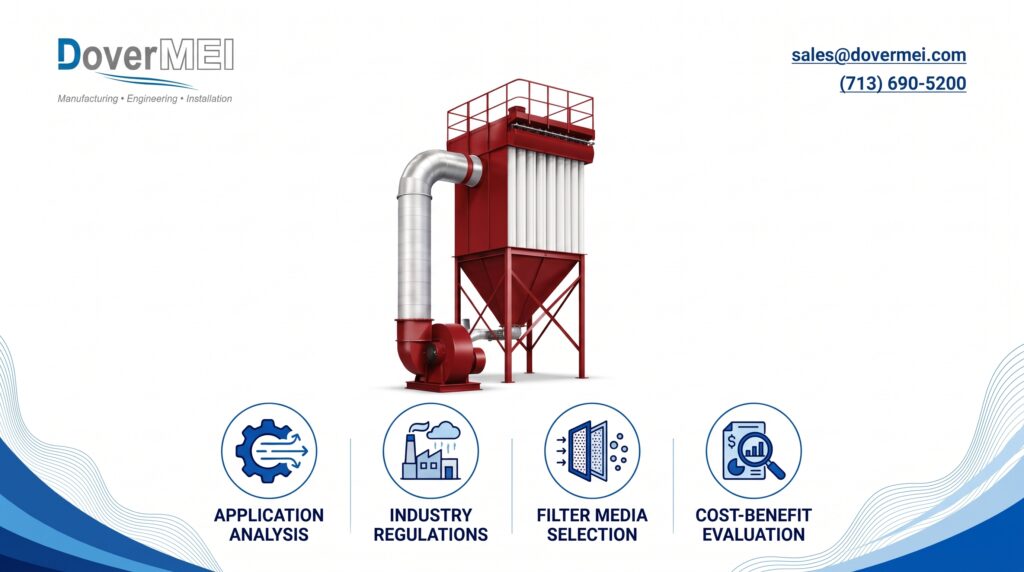
Industrial dust is more than a housekeeping issue—it directly impacts worker safety, equipment performance, product quality, and regulatory compliance. Whether we operate a woodworking shop, metal fabrication facility, pharmaceutical plant, food processing operation, or manufacturing warehouse, choosing the right dust collector is essential for maintaining a clean, efficient, and safe workplace.
Not all dust collection systems are designed for the same applications. Different industries generate different particle sizes, dust volumes, airflow requirements, and combustible dust risks. Selecting the wrong system can lead to poor filtration, excessive maintenance costs, reduced productivity, and even serious safety hazards.
This comprehensive guide explains how to choose the best industrial dust collector for your specific industry, including the different types of dust collectors, sizing calculations, filtration options, compliance requirements, and key buying considerations.
What Is an Industrial Dust Collector?
An industrial dust collector is an air pollution control system designed to capture, filter, and remove airborne dust, fumes, powders, and particulate matter generated during manufacturing or processing operations. The system collects contaminants at the source before they circulate throughout the facility.
Primary Functions of a Dust Collector
- Capture airborne dust at the source.
- Filter fine particles from the air.
- Return clean air to the workplace or exhaust it safely.
- Protect employees from respiratory hazards.
- Prevent dust accumulation on equipment and surfaces.
- Help facilities comply with OSHA, NFPA, and environmental regulations.
An effective dust collection system improves air quality while extending equipment life and reducing cleaning and maintenance costs.
Why Choosing the Right Dust Collector Matters
Selecting the correct system affects nearly every aspect of facility operations.
| Benefit | Impact |
| Worker Safety | Reduces inhalation of harmful dust particles. |
| Regulatory Compliance | Helps meet OSHA and NFPA dust standards. |
| Equipment Protection | Prevents dust buildup inside machinery. |
| Product Quality | Minimizes contamination during production. |
| Operational Efficiency | Reduces downtime and maintenance expenses. |
Choosing a system tailored to our production environment delivers better long-term performance and lower operating costs.
Understand the Type of Dust Your Industry Produces
Before purchasing equipment, we need to evaluate the characteristics of the dust being generated.
1. Particle Size
Dust particles vary significantly.
| Particle Type | Examples |
| Large particles | Wood chips, grain dust, plastic pellets. |
| Fine dust | Sanding dust, flour, cement, silica. |
| Ultra-fine particles | Welding fumes, pharmaceutical powders, toner dust. |
Finer particles require higher-efficiency filtration systems.
2. Dust Volume
Evaluate:
- Continuous production dust.
- Intermittent dust generation.
- High-volume bulk material handling.
- Multiple dust-producing machines operating simultaneously.
Higher dust volumes require greater airflow capacity.
3. Dust Characteristics
Consider whether the dust is:
- Dry or moist.
- Sticky or oily.
- Fibrous.
- Abrasive.
- Hygroscopic.
- Combustible.
Each characteristic influences filter selection and system design.
Types of Dust Collectors for Different Industries
Baghouse Dust Collectors
Best for:
- Cement plants
- Foundries
- Mining
- Woodworking
- Grain processing
Advantages
- Handles high dust loads.
- Excellent filtration efficiency.
- Suitable for continuous operation.
- Long filter life.
Considerations
- Requires periodic bag cleaning or replacement.
- Larger installation footprint.
Cartridge Dust Collectors
Best for:
- Metal fabrication
- Laser cutting
- Pharmaceutical production
- Powder coating
- Food manufacturing
Advantages
- Compact design.
- High filtration surface area.
- Captures very fine particles.
- Easy filter replacement.
Considerations
- Filters require regular maintenance.
- Not ideal for extremely fibrous dust.
Cyclone Dust Collectors
Best for:
- Woodworking.
- Agriculture.
- Plastic manufacturing.
- Bulk material handling.
Advantages
- Removes large particles efficiently.
- Low maintenance.
- No filter required in primary separation stage.
Considerations
- Less effective for fine dust.
- Often used as a pre-separator before another collector.
Wet Dust Collectors
Best for:
- Aluminum grinding.
- Titanium processing.
- Chemical manufacturing.
- Combustible metal dust.
Advantages
- Captures combustible dust safely.
- Reduces explosion risks.
- Controls sparks.
Considerations
- Water management required.
- Higher operating complexity.
Portable Dust Collectors
Best for:
- Small fabrication shops.
- Construction.
- Maintenance operations.
- Temporary workstations.
Advantages
- Mobility.
- Easy installation.
- Flexible operation.
Considerations
- Lower airflow capacity.
- Limited coverage area.
Choose a Dust Collector Based on Your Industry
Woodworking Industry
Woodworking produces:
- Sawdust.
- Wood chips.
- Fine sanding dust.
- Fibrous particles.
Recommended System
- Cyclone pre-separator.
- Baghouse collector.
- Spark detection where necessary.
Important Features
- High CFM.
- Anti-static filters.
- Chip collection hopper.
Metal Fabrication
Metal fabrication generates:
- Welding fumes.
- Grinding dust.
- Plasma cutting particles.
- Aluminum dust.
Recommended System
- Cartridge dust collector.
- HEPA filtration for welding fumes.
- Wet collector for combustible metals.
Food Processing
Dust sources include:
- Flour.
- Sugar.
- Spices.
- Powdered ingredients.
Recommended Features
- Food-grade stainless steel.
- Sanitary construction.
- Easy-to-clean filters.
- Explosion protection.
Pharmaceutical Manufacturing
Requirements include:
- Fine powder capture.
- Contamination control.
- Cleanroom compatibility.
Recommended Features
- HEPA filtration.
- Containment filters.
- Safe-change filter systems.
Chemical Manufacturing
Chemical plants often generate:
- Hazardous powders.
- Corrosive dust.
- Reactive materials.
Recommended Features
- Chemical-resistant construction.
- Wet scrubber options.
- Explosion isolation.
Calculate the Correct Airflow (CFM)
CFM (Cubic Feet per Minute) determines how much air the dust collector moves.
Factors Affecting CFM
| Factor | Importance |
| Number of machines | More machines require greater airflow. |
| Duct length | Longer ducts increase resistance. |
| Hood design | Influences capture efficiency. |
| Dust type | Fine dust requires stronger capture velocity. |
Example Airflow Needs
| Machine | Typical CFM |
| Table saw | 350–450 CFM |
| CNC router | 800–1,500 CFM |
| Welding station | 600–1,000 CFM |
| Grinding station | 500–900 CFM |
Oversizing wastes energy, while undersizing reduces dust capture effectiveness.
Understand Static Pressure Requirements
Static pressure measures resistance inside the dust collection system.
Sources of Static Pressure
- Duct length.
- Elbows and fittings.
- Flexible hoses.
- Filters.
- Collection hoppers.
Higher resistance requires a more powerful blower.
Signs Static Pressure Is Too High
- Weak suction.
- Dust escaping collection points.
- Increased motor load.
- Reduced airflow.
Select the Right Filter Efficiency
MERV Ratings
| MERV Rating | Particle Capture |
| MERV 11–13 | Larger industrial dust. |
| MERV 14–15 | Fine manufacturing dust. |
| MERV 16 | Very fine particulate matter. |
HEPA Filters
HEPA filters capture:
- 99.97% of particles at 0.3 microns.
- Pharmaceutical powders.
- Welding fumes.
- Hazardous dust.
Best for environments requiring superior air cleanliness.
Consider Combustible Dust Safety
Some dusts create explosion hazards.
Common Combustible Dust Materials
- Aluminum.
- Magnesium.
- Wood flour.
- Sugar.
- Grain.
- Coal.
- Plastic powders.
Safety Features to Look For
- Explosion vents.
- Spark arrestors.
- Isolation valves.
- Flame suppression systems.
- Grounding and bonding.
- NFPA-compliant construction.
Safety should never be an afterthought when combustible dust is present.
Evaluate Dust Collector Placement
Indoor Installation
Benefits
- Protected from weather.
- Easier maintenance.
- Reduced duct length.
Requirements
- Fire protection.
- Adequate clearance.
- Noise control.
- Ventilation.
Outdoor Installation
Benefits
- Saves indoor space.
- Easier explosion venting.
- Reduced indoor noise.
Considerations
- Weather-resistant housing.
- Freeze protection.
- Longer duct runs.
Energy Efficiency Matters
Dust collectors operate for many hours each day.
Energy-Saving Features
- Variable Frequency Drives (VFDs).
- Automatic filter cleaning.
- Efficient blower motors.
- Smart airflow controls.
- Differential pressure monitoring.
Energy-efficient systems reduce operating expenses over time.
Automatic Filter Cleaning Systems
Pulse-Jet Cleaning
- Continuous operation.
- Compressed air pulses clean filters.
- Minimal downtime.
Shaker Cleaning
- Mechanical shaking.
- Used during downtime.
Reverse-Air Cleaning
- Reverses airflow through filters.
- Suitable for larger baghouse systems.
Automatic cleaning extends filter life and maintains consistent airflow.
Ductwork Design Is Just as Important
A quality collector performs poorly with poorly designed ductwork.
Best Practices
- Keep duct runs short.
- Minimize sharp bends.
- Use proper duct diameter.
- Maintain transport velocity.
- Seal duct leaks.
Well-designed ductwork improves suction and reduces maintenance.
Maintenance Requirements to Consider
Routine maintenance keeps systems performing efficiently.
Maintenance Checklist
- Inspect filters.
- Empty dust bins.
- Check differential pressure gauges.
- Inspect ductwork.
- Lubricate moving components.
- Test explosion protection devices.
- Inspect fan blades.
Preventive maintenance reduces unexpected downtime.
Questions to Ask Before Buying a Dust Collector
Use this checklist before selecting equipment.
Dust Collection Buying Checklist
What type of dust do we generate?
Is the dust combustible?
How many collection points are needed?
What airflow (CFM) is required?
What static pressure will the system experience?
Do we need HEPA filtration?
Will the collector be installed indoors or outdoors?
How often will filters require replacement?
Does the system meet OSHA and NFPA standards?
Can the system expand with future production?
Answering these questions ensures the selected system matches operational requirements.
Common Mistakes to Avoid When Choosing a Dust Collector
| Mistake | Better Approach |
| Choosing the lowest-cost system. | Evaluate lifetime operating costs and performance. |
| Ignoring airflow calculations. | Size the system using actual CFM requirements. |
| Using incorrect filter media. | Match filters to dust type and particle size. |
| Forgetting combustible dust protection. | Include NFPA-required safety features. |
| Poor ductwork design. | Design ducts for proper transport velocity and airflow. |
Avoiding these issues improves reliability and safety.
Signs It’s Time to Upgrade Your Dust Collection System
Your current system may no longer meet production needs if you notice:
- Visible airborne dust.
- Frequent filter clogging.
- Increased maintenance.
- Rising energy costs.
- Equipment overheating.
- Dust accumulation throughout the facility.
- Production expansion exceeding system capacity.
Modern dust collectors offer improved filtration efficiency, automation, and energy savings.
How to Future-Proof Your Dust Collection Investment
Manufacturing needs evolve over time. Choosing a scalable dust collection system helps accommodate future growth.
Features That Support Expansion
- Modular collector design.
- Expandable duct connections.
- Additional filter capacity.
- Variable-speed blower control.
- Smart monitoring and diagnostics.
- Remote maintenance alerts.
Planning for future production increases reduces replacement costs later.
Final Thoughts: Choosing the Best Dust Collector for Long-Term Performance
Choosing the right dust collector for your industry requires balancing airflow capacity, filtration efficiency, safety requirements, maintenance needs, and long-term operating costs. Every industry generates unique dust hazards, and the ideal solution depends on the type of material being processed, particle size, dust volume, and regulatory requirements.
A properly engineered dust collection system captures contaminants at the source, protects workers, improves product quality, extends equipment life, and supports OSHA and NFPA compliance. By selecting a system designed specifically for your application—and ensuring proper sizing, filtration, ductwork design, and maintenance—we create a safer, cleaner, and more efficient industrial environment while maximizing the return on our investment.
Contact our team today to discuss your industry, dust collection requirements, and facility layout. We’ll help you select a customized industrial dust collection solution that delivers the airflow, filtration, and safety features your operation needs.
Frequently Asked Questions About Choosing the Right Dust Collector
What size dust collector do I need for my facility?
The correct size depends on the total airflow (CFM), number of dust collection points, duct length, static pressure, and the type of dust generated.
Which dust collector is best for fine dust?
Cartridge dust collectors with high-efficiency or HEPA filters are typically the best choice for capturing fine particulate matter.
Are baghouse dust collectors better than cartridge dust collectors?
Baghouse systems excel at handling high dust volumes and heavy industrial applications, while cartridge collectors are more compact and better suited for fine dust.
Do I need a dust collector for combustible dust?
Yes. Facilities producing combustible dust should use systems designed with explosion protection features that comply with applicable NFPA standards.
How often should dust collector filters be replaced?
Filter replacement intervals depend on dust type, operating hours, filter cleaning system performance, and manufacturer recommendations. Regular inspections help determine the appropriate schedule.
Protect Your Facility with the Right Dust Collection Solution
A high-performance dust collection system is an investment in workplace safety, regulatory compliance, equipment longevity, and operational efficiency. Whether you’re upgrading an existing system or designing a new facility, choosing the right dust collector ensures cleaner air, improved productivity, and reliable performance for years to come.