

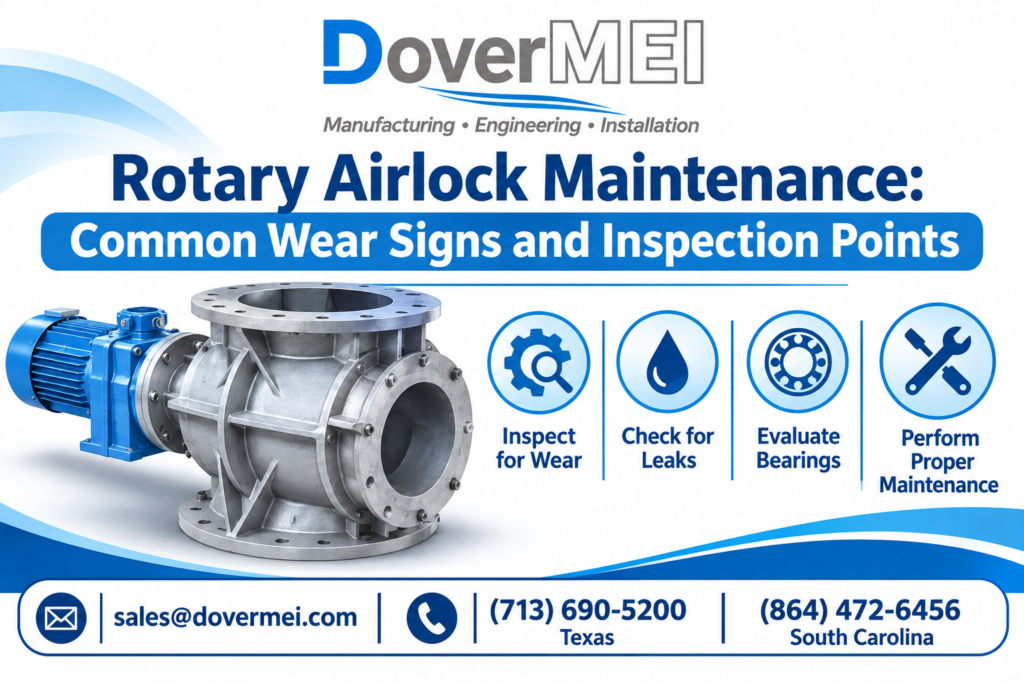
Rotary airlocks play an important role in bulk material handling systems by controlling the discharge of powders, granules, pellets, and other dry materials while maintaining an effective air seal between equipment operating at different pressure levels. Because these components often operate continuously in demanding industrial environments, routine maintenance is essential to maintaining reliable performance.
Over time, normal operation can cause wear to rotor blades, housing surfaces, bearings, seals, and drive components. If these issues go unnoticed, they can lead to material leakage, air loss, inconsistent discharge, equipment damage, and unexpected production downtime.
Understanding the common signs of rotary airlock wear and knowing which components to inspect can help maintenance teams identify problems early. With a proactive maintenance program, facilities can extend equipment service life, improve material flow, and reduce the likelihood of costly interruptions.
Why Regular Rotary Airlock Maintenance Matters
A rotary airlock, sometimes called a rotary valve or rotary feeder, uses a rotating element with multiple pockets to transfer bulk materials from one section of a processing system to another. It is commonly installed beneath hoppers, bins, cyclones, dust collectors, and pneumatic conveying systems.
Its performance depends on maintaining appropriate clearances between the rotor and housing while ensuring that the rotating assembly operates smoothly.
Regular rotary airlock maintenance provides several important benefits:
- Improved operational reliability: Identifying worn or damaged components helps prevent unexpected equipment failures.
- Consistent material flow: Proper rotor clearances and component condition support reliable material discharge.
- Reduced air leakage: Maintaining sealing surfaces helps preserve pressure differentials in pneumatic conveying and dust collection systems.
- Longer equipment service life: Replacing worn components before they cause additional damage can extend equipment longevity.
- Lower maintenance costs: Planned inspections and repairs can reduce emergency service requirements and production interruptions.
For facilities that depend on continuous material movement, even minor rotary airlock problems can affect overall system performance.
7 Common Signs of Rotary Airlock Wear
Recognizing early warning signs is one of the most effective ways to prevent serious equipment problems. Maintenance personnel should monitor the following conditions during routine inspections.
1. Increased Air Leakage
Air leakage is a common indication of excessive wear in rotary airlocks used in pneumatic conveying and pressure-controlled applications.
As rotor blade tips and housing surfaces wear down, the clearances between these components may increase. This can allow more air to pass through the valve than intended.
Common warning signs include:
- Reduced conveying system efficiency.
- Difficulty maintaining operating pressure.
- Increased air consumption.
- Changes in dust collector or conveying system performance.
Excessive leakage can reduce system efficiency and place additional demands on blowers, compressors, and other equipment.
2. Unusual Noise or Excessive Vibration
A properly maintained rotary airlock should operate with relatively consistent noise and vibration levels.
Grinding, scraping, knocking, or unusual rattling sounds may indicate worn bearings, rotor contact with the housing, loose fasteners, or foreign material inside the valve.
Excessive vibration may also point to rotor imbalance, misalignment, or problems with the drive assembly.
Maintenance teams should investigate sudden changes in operating noise or vibration rather than assuming they are normal operating conditions.
3. Irregular Material Discharge
Inconsistent material flow can indicate problems with the rotor, internal clearances, or drive components.
For example, damaged rotor pockets, material buildup, or excessive wear may prevent the valve from delivering a consistent volume of material.
Potential symptoms include:
- Intermittent material discharge.
- Reduced feeding capacity.
- Material accumulation inside the valve.
- Unexpected changes in downstream equipment performance.
It is important to determine whether the problem originates within the rotary airlock or from upstream equipment, such as a hopper or feeder.
4. Material Buildup Inside the Housing
Some bulk materials can accumulate along rotor blades, pocket surfaces, and housing walls.
This is particularly common when handling sticky, abrasive, moist, or cohesive materials.
Material buildup can interfere with rotor movement, reduce available pocket volume, increase friction, and contribute to uneven discharge.
During inspections, look for hardened deposits, compacted material, and signs of product accumulation around internal surfaces.
Cleaning procedures should account for the material being handled and the equipment manufacturer’s recommendations.
5. Worn or Damaged Rotor Blades
Rotor blades are exposed to continuous contact with bulk materials, making them vulnerable to abrasion and mechanical wear.
Over time, blade tips and edges may become rounded, chipped, bent, or uneven.
This can increase internal clearances and reduce the rotary airlock’s ability to maintain an effective air seal.
The rate of wear depends on factors such as material abrasiveness, operating speed, temperature, and equipment design.
Severely worn blades may require repair or replacement to restore proper operating conditions.
6. Bearing Overheating or Lubrication Problems
Bearings support the rotor shaft and allow the rotating assembly to operate smoothly.
Insufficient lubrication, contamination, misalignment, and excessive loading can cause premature bearing wear.
Warning signs include:
- Unusually high bearing temperatures.
- Grinding or squealing noises.
- Excessive shaft movement.
- Increased vibration.
- Grease leakage or contamination.
Bearing problems should be addressed promptly because a failed bearing can damage other components and cause unexpected equipment shutdowns.
7. Increased Motor Load or Drive Problems
Changes in motor current, power consumption, or operating temperature may indicate mechanical resistance within the rotary airlock.
Possible causes include material obstruction, bearing failure, rotor-to-housing contact, or problems with the gearbox and drive assembly.
Inspect the motor, gearbox, coupling, chains, belts, and other drive components for visible damage, loose connections, abnormal wear, and alignment issues.
Monitoring motor performance over time can also help identify developing mechanical problems.
Essential Rotary Airlock Inspection Points
A structured inspection program helps maintenance teams evaluate equipment condition and identify potential failures before they affect production.
The following components deserve particular attention.
| Component | What to Inspect | Potential Warning Signs |
| Rotor blades | Blade edges, surfaces, and overall condition | Erosion, chipping, deformation |
| Housing | Internal surfaces and clearances | Scoring, abrasion, excessive wear |
| Bearings | Temperature, lubrication, and movement | Overheating, noise, vibration |
| Shaft | Alignment and surface condition | Bending, excessive movement |
| Seals | Condition and sealing effectiveness | Leakage, cracking, deterioration |
| Drive assembly | Motor, gearbox, belts, and couplings | Noise, slippage, misalignment |
| Fasteners | Bolts, mounting points, and connections | Looseness, corrosion, damage |
Inspect Rotor-to-Housing Clearances
One of the most important inspection points is the clearance between the rotor blades and housing.
Excessive clearance can increase air leakage and reduce system efficiency. Insufficient clearance can cause metal-to-metal contact, particularly when thermal expansion or mechanical misalignment occurs.
Clearances should be measured using the equipment manufacturer’s specifications. Avoid assuming that tighter clearances are always better, as improper adjustments can cause additional damage.
Check Bearings and Shaft Alignment
Inspect bearing housings for signs of overheating, contamination, and lubrication problems.
Check shaft alignment and look for unusual movement that could indicate bearing deterioration or mechanical stress.
Misalignment can accelerate wear throughout the rotating assembly, making early detection especially important.
Examine Seals and Connections
Inspect shaft seals, end covers, access doors, and equipment connections for signs of leakage or deterioration.
Damaged seals can allow air or material to escape, affecting system performance and potentially creating housekeeping or dust-control concerns.
Evaluate the Drive System
Check the motor and gearbox for abnormal operating temperatures, noise, vibration, and visible damage.
For belt- or chain-driven systems, inspect tension, alignment, and component condition according to manufacturer recommendations.
How to Build an Effective Rotary Airlock Preventive Maintenance Program
Routine maintenance should be based on operating conditions, equipment design, manufacturer recommendations, and historical maintenance records.
A practical preventive maintenance program should include the following activities:
Establish a Baseline Inspection
Document the equipment’s normal operating conditions, including noise, vibration, temperature, motor current, and material discharge performance.
These measurements provide a reference for identifying future changes.
Create a Consistent Inspection Schedule
Establish inspection intervals based on operating hours, material characteristics, and the severity of the application. High-wear environments may require more frequent inspections.
Maintain Inspection Records
Record wear measurements, lubrication activities, replaced components, and observed operating conditions. Tracking this information helps maintenance teams recognize recurring problems.
Replace Components Before Failure
Do not wait for complete equipment failure before addressing worn rotor blades, deteriorating bearings, damaged seals, or compromised drive components.
Replacing individual components at the appropriate time can prevent more extensive repairs.
Work With Experienced Industrial Maintenance Professionals
When wear becomes excessive or recurring mechanical problems develop, professional inspection and maintenance can help identify the underlying cause.
Experienced technicians can evaluate equipment condition, recommend appropriate repairs, and help ensure that rotary airlocks operate according to their intended specifications.
Important safety reminder: Before opening or servicing a rotary airlock, follow applicable lockout/tagout procedures, isolate electrical and mechanical energy sources, relieve stored pressure, and verify that the equipment is safe to access. Follow the manufacturer’s maintenance instructions and applicable workplace safety requirements.
Minimize Production Downtime With a Rotary Airlock Exchange Program
Regular rotary airlock maintenance is essential, but removing equipment for inspection and rebuilding can disrupt production schedules. To help facilities avoid unnecessary downtime, DoverMEI offers a rotary airlock exchange program designed to keep operations running while critical equipment receives professional service.
Through this program, DoverMEI installs a loaner rotary airlock at the customer’s facility and transports the customer’s existing unit to our shop for a thorough inspection, maintenance, and complete rebuild as needed. Once the original airlock has been serviced, DoverMEI returns it to the facility and swaps it with the loaner unit.
This approach allows customers to have their rotary airlocks regularly inspected, rebuilt, and maintained without sacrificing valuable production time. It also helps maintenance teams implement a proactive equipment maintenance schedule rather than waiting for unexpected failures or equipment breakdowns.
Key benefits of DoverMEI’s Rotary Airlock Exchange Program include:
- Minimal Production Disruption: Keep operations running while your original rotary airlock is being serviced.
- Professional Inspection and Rebuilding: Have your equipment thoroughly inspected and rebuilt at DoverMEI’s shop.
- Proactive Maintenance: Schedule regular servicing instead of waiting for excessive wear or unexpected equipment failure.
- Reduced Equipment Downtime: Avoid extended production interruptions associated with removing and servicing critical equipment.
- Improved Equipment Reliability: Maintain rotary airlocks in better operating condition through routine professional maintenance.
Keep Your Rotary Airlock Operating Reliably
Rotary airlocks are essential components in many industrial material handling systems, and their performance directly affects equipment efficiency and production reliability. Worn rotor blades, damaged bearings, excessive clearances, and drive problems can gradually reduce performance if they are not identified and addressed.
By implementing regular inspections and preventive maintenance practices, facilities can detect early signs of wear, minimize unexpected downtime, and protect critical equipment.
The key is to look beyond immediate symptoms and understand what is causing the wear. Addressing underlying mechanical issues can help prevent recurring failures and support more reliable long-term operation.
Partner With DoverMEI for Industrial Maintenance Support
Keeping bulk material handling equipment operating efficiently requires more than occasional repairs. It takes experienced technicians, proactive inspections, and a maintenance strategy that addresses equipment performance and long-term reliability.
DoverMEI provides industrial maintenance services and support for bulk material handling systems, helping manufacturing and processing facilities maintain critical equipment across demanding operating environments. From preventive maintenance and equipment inspections to troubleshooting and repairs, DoverMEI helps businesses address maintenance challenges before they become costly operational disruptions.
Whether you need support for rotary airlocks, conveyors, or other bulk material handling equipment, DoverMEI can help you develop a maintenance approach that supports reliable operations.
Contact DoverMEI today to discuss your industrial maintenance requirements and learn how experienced maintenance support can help keep your equipment operating at its best.
Frequently Asked Questions (FAQs)
How often should a rotary airlock be inspected?
Rotary airlocks should be inspected regularly based on operating hours, material characteristics, and manufacturer recommendations. Applications involving abrasive or corrosive materials may require more frequent inspections. Routine monitoring helps identify wear before it causes equipment failure.
What are the most common causes of rotary airlock failure?
Common causes include rotor blade wear, excessive rotor-to-housing clearance, bearing failure, inadequate lubrication, material buildup, shaft misalignment, and drive system problems. Improper operation and inadequate maintenance can accelerate component deterioration.
How do you know when rotary airlock rotor blades need replacement?
Rotor blades may need replacement when they show significant erosion, chipping, deformation, or uneven wear. Increased air leakage and reduced material handling performance can also indicate that blade clearances have become excessive. Always compare measurements against manufacturer specifications.
What causes air leakage in a rotary airlock?
Air leakage commonly occurs when rotor blade tips, housing surfaces, or sealing components become worn. Excessive internal clearances allow more air to pass through the valve, potentially reducing the efficiency of pneumatic conveying and pressure-controlled systems.
Can a worn rotary airlock affect production efficiency?
Yes. A worn rotary airlock can cause inconsistent material discharge, increased air consumption, reduced conveying efficiency, and unexpected equipment downtime. These problems can affect downstream processes and overall production performance.
What is the difference between a rotary airlock and a rotary feeder?
The terms are sometimes used interchangeably, but their primary functions can differ. A rotary airlock is designed to transfer bulk materials while maintaining a pressure seal between system sections. A rotary feeder primarily controls material flow into downstream equipment. Some rotary valves perform both functions.
Why is bearing lubrication important for rotary airlocks?
Proper bearing lubrication reduces friction, controls heat buildup, and minimizes premature wear. Inadequate lubrication or contaminated grease can lead to bearing damage, excessive vibration, and potential equipment failure.
Can rotary airlocks be repaired instead of replaced?
In many cases, yes. Depending on equipment design and the extent of damage, worn rotor blades, bearings, seals, and other components may be repaired or replaced individually. However, severe housing damage or extensive mechanical deterioration may make complete replacement more practical.
What materials cause the most wear in rotary airlocks?
Abrasive materials such as sand, cement, minerals, grain, and other particulate products can accelerate wear on rotor blades and housing surfaces. The actual wear rate depends on particle size, hardness, moisture content, operating speed, and equipment design.
How can preventive maintenance reduce rotary airlock downtime?
Preventive maintenance helps identify deteriorating components, lubrication problems, excessive clearances, and mechanical misalignment before they cause failures. Planned inspections and timely repairs allow facilities to schedule maintenance more effectively and reduce unexpected production interruptions.