

Every industrial facility has unique material characteristics, production goals, and operational challenges. A custom silo is engineered to match your specific process requirements, improving material flow, maximizing storage efficiency, reducing maintenance, and supporting long-term plant performance. Custom-engineered silo systems also help manufacturers improve safety, regulatory compliance, and return on investment.
Choosing the right silo is about far more than storage capacity. Every bulk material behaves differently, and every production facility operates under unique conditions. A properly engineered custom silo accounts for material properties, production rates, environmental factors, and plant layout to improve efficiency, reduce downtime, and deliver a lower total cost of ownership over the life of the system.
Why Standard Silos Often Create Hidden Costs
Many facilities purchase off-the-shelf silos because they appear less expensive initially. However, standardized designs frequently fail to account for how materials actually behave inside storage systems.
This often results in:
- Material bridging
- Ratholing
- Inconsistent discharge
- Product segregation
- Excessive dust generation
- Increased maintenance
- Production interruptions
Over time, these operational issues become significantly more expensive than investing in a purpose-built solution.
For manufacturers handling powders, pellets, grains, minerals, chemicals, or food ingredients, storage performance directly impacts overall plant productivity.
Every Bulk Material Behaves Differently
One of the biggest misconceptions in bulk material handling is assuming all materials flow similarly.
Different materials vary in:
| Material Property | Impact on Silo Design |
| Bulk density | Determines structural loading |
| Particle size | Influences discharge performance |
| Moisture content | Affects flowability |
| Abrasiveness | Determines liner and material selection |
| Cohesiveness | Influences hopper geometry |
| Angle of repose | Impacts storage efficiency |
| Temperature sensitivity | Requires insulation or environmental controls |
For example:
- Flour behaves very differently than cement.
- Plastic resin pellets flow differently than fertilizer.
- Sugar can cake during storage.
- Chemical powders may require specialized coatings.
- Pharmaceutical ingredients often require sanitary finishes.
Designing every silo around these characteristics improves reliability while reducing costly operational problems.
What Makes a Custom Silo Different?
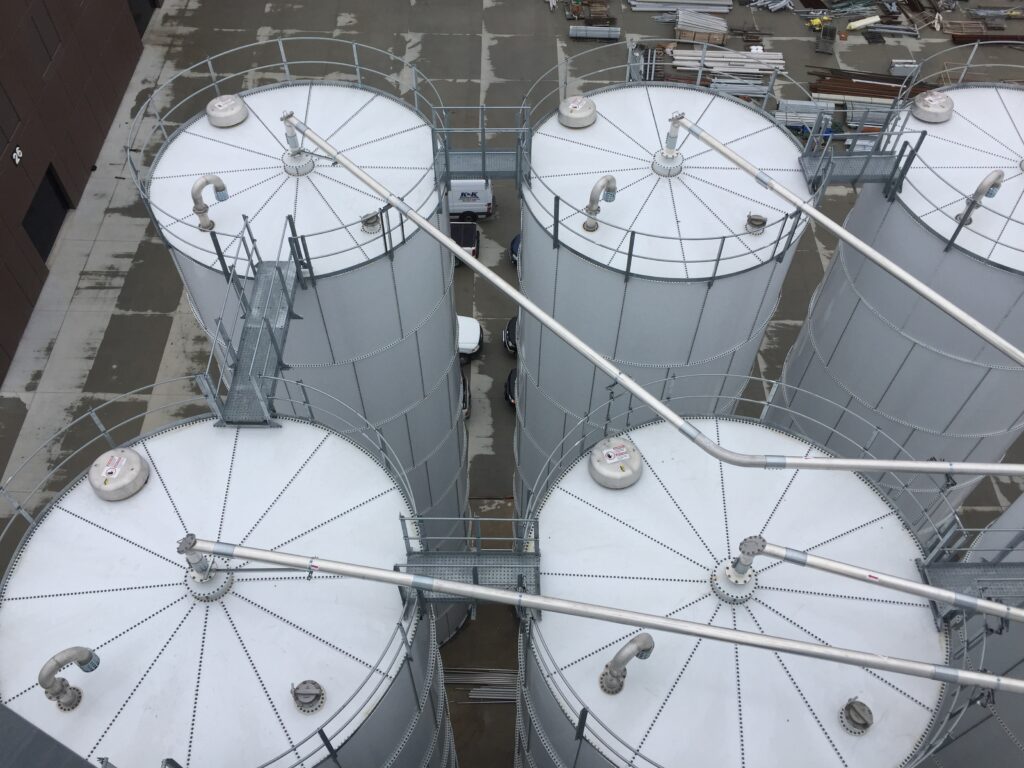
A custom-engineered silo is designed specifically for your production process—not adapted after installation.
Key engineering considerations include:
Material Testing
Understanding flow characteristics before fabrication helps engineers determine:
- Hopper angles
- Outlet sizing
- Flow aids
- Internal liners
Capacity Requirements
Storage isn’t simply about volume.
Engineers evaluate:
- Daily production
- Delivery schedules
- Peak demand
- Inventory requirements
- Future expansion
The result is right-sized storage that supports production without unnecessary capital costs.
Structural Engineering
Industrial silos must withstand:
- Wind loads
- Seismic requirements
- Material weight
- Thermal expansion
- Environmental conditions
Proper engineering ensures long-term structural integrity.
Designing for Efficient Material Flow
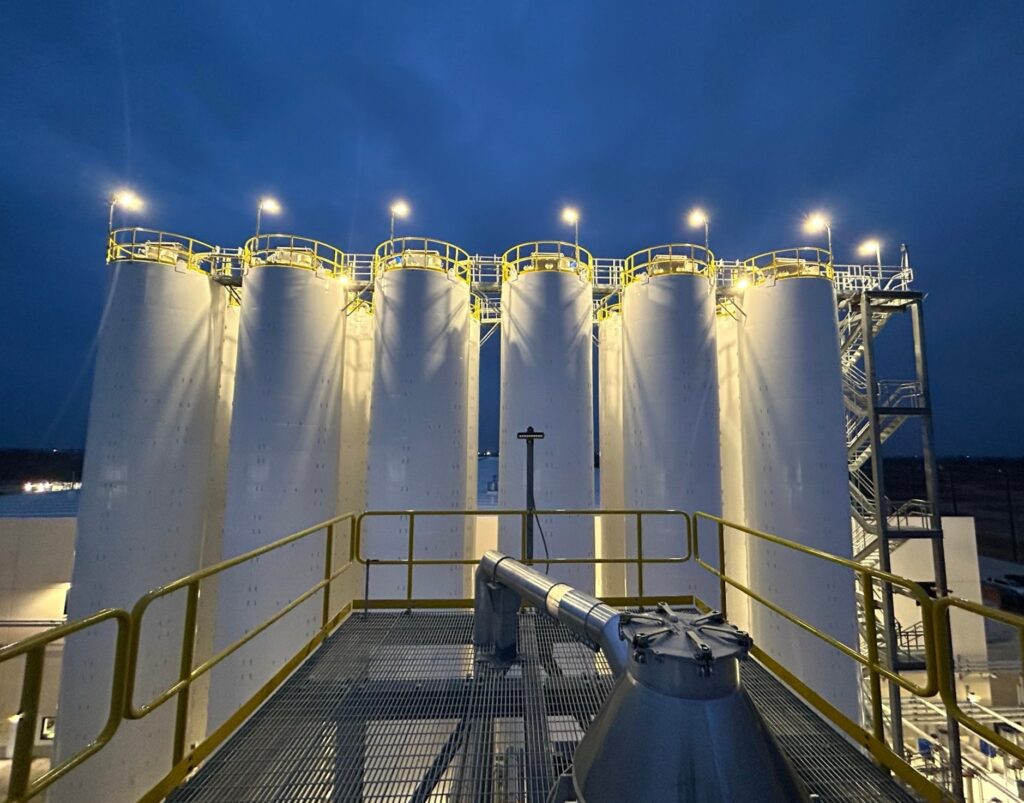
Poor flow creates production bottlenecks that ripple throughout an entire manufacturing operation.
Modern silo engineering focuses on achieving mass flow whenever possible.
Benefits include:
- First-in, first-out material movement
- Reduced material segregation
- Consistent discharge
- Lower risk of contamination
- Better product quality
Flow optimization may include:
- Cone angle optimization
- Flow promotion devices
- Vibrators
- Air cannons
- Fluidizing systems
- Specialized discharge equipment
These solutions are selected based on the specific material—not generic assumptions.
Integrating the Silo into Your Entire Material Handling System
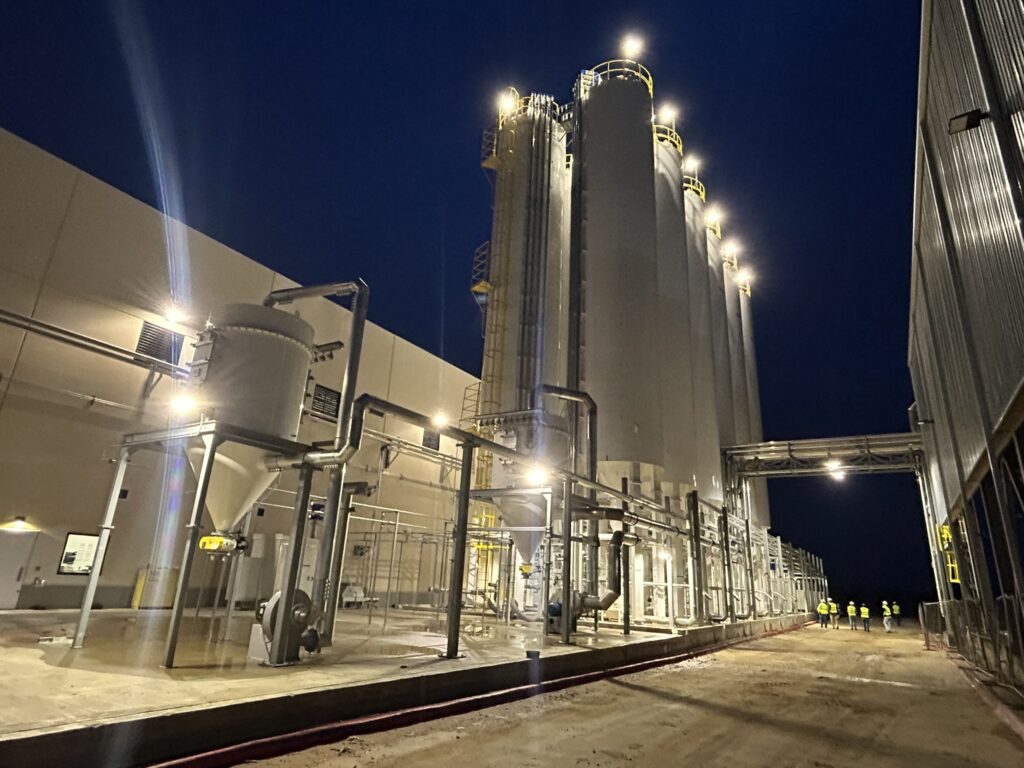
A silo should never be designed in isolation.
Instead, it should integrate seamlessly with:
- Pneumatic conveying systems
- Screw conveyors
- Bucket elevators
- Railcar unloading systems
- Bulk bag unloading stations
- Dust collection equipment
- Process automation controls
- Inventory monitoring systems
A turnkey engineering approach ensures every component works together, reducing installation complexity and improving long-term reliability.
Safety and Compliance Should Be Designed In
Industrial storage systems must meet more than production goals.
They also play a critical role in facility safety.
Depending on the application, silo systems may require:
- OSHA-compliant access platforms
- NFPA combustible dust considerations
- Explosion venting
- Dust collection integration
- Safe confined space access
- Pressure relief systems
- Level monitoring
- Overfill protection
Designing these features from the beginning is far more effective than retrofitting them later.
Automation Improves Long-Term Performance
Today’s facilities expect more from storage systems than simply holding material.
Modern silos increasingly include:
Smart Monitoring
- Continuous inventory tracking
- Remote monitoring
- High-level alarms
- Low-level alarms
Predictive Maintenance
Sensors can identify:
- Vibration
- Material buildup
- Blockages
- Mechanical wear
This helps maintenance teams address issues before they create production downtime.
Process Automation
Automation enables:
- Improved material scheduling
- Reduced labor requirements
- Consistent batch production
- Better process control
These capabilities become especially valuable for multi-site operations seeking standardized performance across facilities.
When Does a Facility Need a Custom Silo?
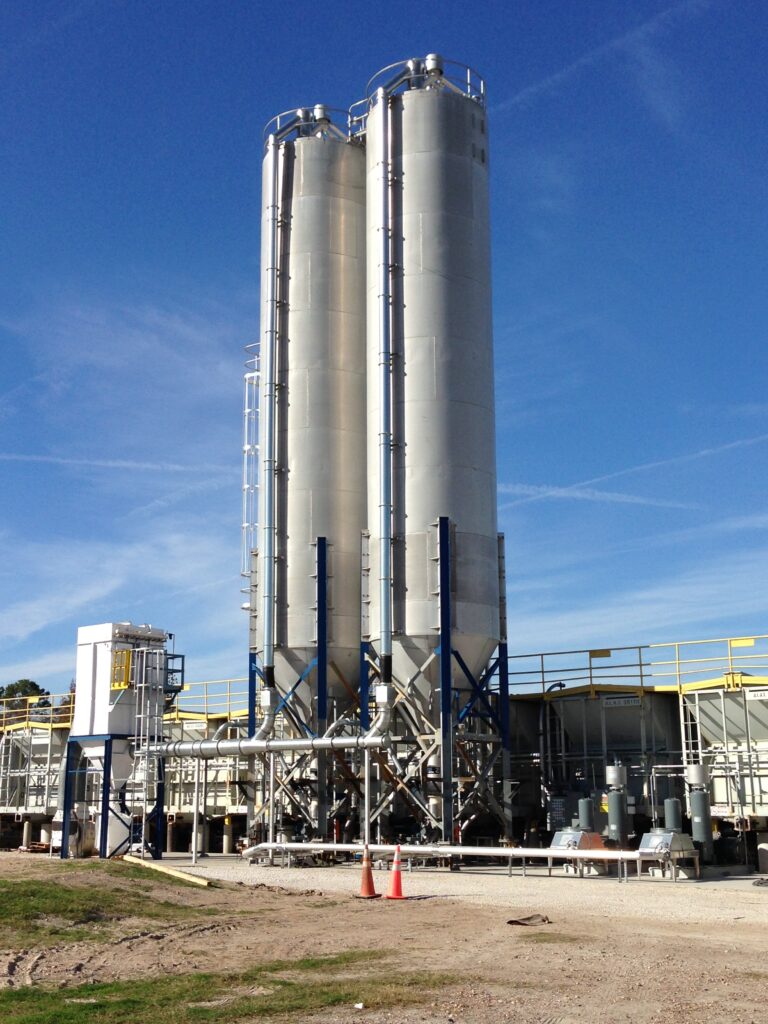
Several situations indicate that standard storage solutions may no longer meet operational requirements.
Common buying triggers include:
- Plant expansions
- Capacity constraints
- New product lines
- Material changes
- Aging storage equipment
- Frequent maintenance issues
- Dust compliance concerns
- Process automation initiatives
- Facility modernization projects
Rather than replacing existing equipment with another generic solution, many organizations choose engineered systems that better support long-term growth.
Custom vs. Standard Silo Comparison
| Feature | Standard Silo | Custom Silo |
| Material-specific design | Limited | ✔ |
| Flow optimization | Basic | ✔ |
| Automation integration | Limited | ✔ |
| Future expansion | Difficult | ✔ |
| Reduced maintenance | Moderate | ✔ |
| Dust control integration | Optional | ✔ |
| Structural optimization | Generic | ✔ |
| Long-term ROI | Moderate | High |
Why Engineering Expertise Matters
The most successful silo projects begin long before fabrication.
Experienced engineering teams evaluate:
- Material characteristics
- Facility layout
- Production goals
- Utility requirements
- Future capacity planning
- Installation logistics
- Maintenance accessibility
- Lifecycle operating costs
This systems-based approach helps eliminate costly surprises while improving project execution.
Rather than managing multiple vendors, many manufacturers benefit from partnering with a single source that provides engineering, fabrication, installation, automation, and ongoing maintenance support.
Partner with DoverMEI for Engineered Bulk Material Handling Solutions
Every industrial process is different, and your storage system should reflect that. DoverMEI designs, fabricates, installs, and supports custom bulk material handling systems tailored to your facility’s operational goals.
Whether you’re expanding production, replacing aging equipment, or improving process efficiency, DoverMEI provides turnkey engineering solutions that reduce downtime, improve safety, and maximize long-term performance.
Contact DoverMEI today to discuss your next silo project and discover how a custom-engineered solution can improve throughput, reliability, and operational efficiency.
Frequently Asked Questions
What is a custom silo?
A custom silo is an engineered storage system designed specifically for a facility’s material properties, production requirements, and operational goals.
Why is custom silo design important?
Custom silo design improves material flow, reduces downtime, enhances safety, and lowers long-term operating costs.
Which industries benefit most from custom silos?
Food processing, chemical manufacturing, plastics, agriculture, pharmaceuticals, mining, cement, and bulk material handling operations all benefit from engineered silo solutions.
How do custom silos improve production efficiency?
They reduce material flow problems, minimize maintenance, improve automation, and provide consistent product discharge.
Can a custom silo integrate with existing equipment?
Yes. Custom silo systems are designed to integrate with pneumatic conveying, dust collection, bulk bag handling, automation, and other material handling equipment.