

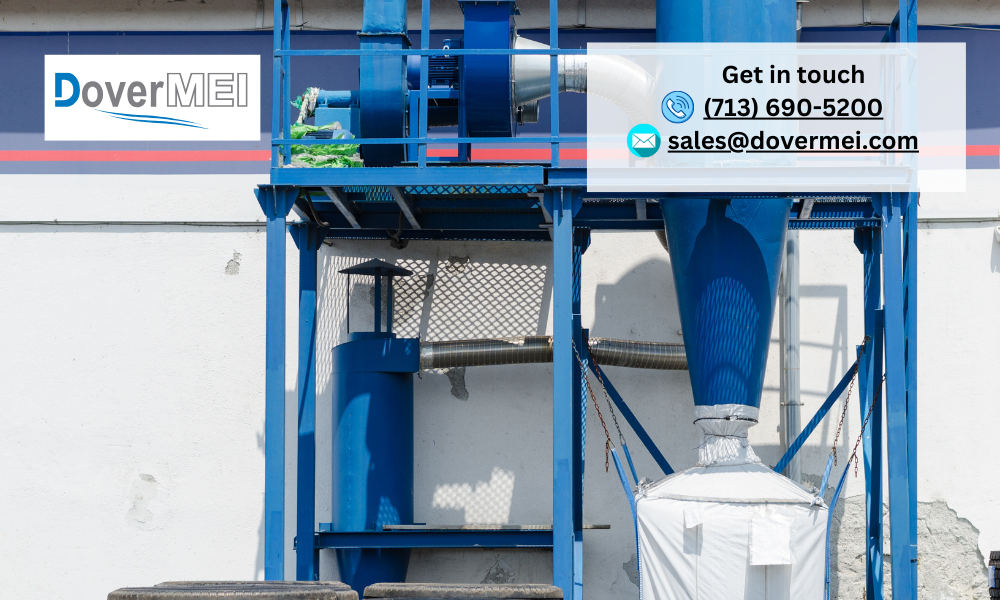
Dust collectors are essential for South Carolina manufacturing facilities to control airborne contaminants, improve worker safety, maintain OSHA and NFPA compliance, and protect equipment. Properly engineered systems reduce downtime, enhance air quality, and support efficient, scalable operations across industries such as plastics, metals, food processing, and bulk material handling.
Dust collectors for manufacturing facilities in South Carolina remove harmful airborne dust, improve indoor air quality, and ensure regulatory compliance. Designed for regional industries and climate conditions, these systems protect workers, prevent equipment damage, reduce fire risks, and support long-term operational efficiency.
Why Dust Collection Is Critical for South Carolina Manufacturers
South Carolina’s manufacturing sector spans plastics, aerospace, automotive, food processing, chemicals, wood products, and bulk materials. Many of these processes generate fine dusts that pose health, explosion, and equipment risks if not properly controlled.
Unique regional considerations include:
- High humidity, which can affect filter performance and dust behavior
- Strict OSHA and NFPA enforcement
- Rapid industrial growth, requiring scalable systems
- Hot operating environments, increasing airborne particulate levels
An engineered dust collection system addresses these challenges while improving overall plant performance.
Types of Dust Collectors Used in South Carolina Manufacturing
Baghouse Dust Collectors
Best suited for high-dust-load and high-temperature environments.
Key advantages:
- Handles large air volumes
- Ideal for abrasive or heavy dust
- Long filter life with proper maintenance
Common applications:
Cement, aggregates, wood products, bulk solids, foundries
Cartridge Dust Collectors
Compact, high-efficiency systems designed for fine particulates.
Key advantages:
- Smaller footprint
- High filtration efficiency
- Lower compressed air usage
Common applications:
Metal fabrication, welding fumes, pharmaceuticals, plastics
Cyclone Dust Collectors
Mechanical pre-separators that remove large particles.
Key advantages:
- No filters required
- Reduces load on downstream collectors
- Low maintenance
Common applications:
Woodworking, grain handling, pellet processing
Wet Scrubbers
Use liquid to capture combustible or sticky dust.
Key advantages:
- Explosion risk reduction
- Effective for hazardous dusts
- Suitable for high-moisture processes
Common applications:
Chemical processing, aluminum dust, specialty materials
Key Compliance Standards in South Carolina
Manufacturing facilities must align with national and local safety regulations:
- OSHA – Worker exposure limits and ventilation requirements
- NFPA 652, 654, 664 – Combustible dust safety standards
- EPA – Air emissions and environmental compliance
- Local AHJs – Fire marshal and building code requirements
Proper dust collector design includes explosion venting, isolation valves, grounding, and monitoring to meet compliance expectations.
How to Choose the Right Dust Collector System
Critical Selection Factors
- Dust type (combustible, abrasive, toxic, hygroscopic)
- Particle size and load
- Airflow (CFM) requirements
- Facility layout and ceiling height
- Future expansion plans
- Maintenance access and downtime tolerance
Engineering Insight (High Information Gain)
Many system failures stem not from poor equipment—but improper duct design and air velocity control. Optimized conveying velocities prevent dust settling, reduce filter loading, and significantly extend system lifespan.
Performance Comparison: Common Dust Collector Types
| Dust Collector Type | Best For | Filtration Efficiency | Footprint | Maintenance Level |
| Baghouse | Heavy dust loads | High | Large | Moderate |
| Cartridge | Fine particulates | Very High | Compact | Low |
| Cyclone | Large particles | Medium | Medium | Very Low |
| Wet Scrubber | Hazardous dust | High | Medium | Moderate |
Operational Benefits for South Carolina Facilities
- Improved indoor air quality
- Reduced fire and explosion risk
- Longer equipment life
- Increased production uptime
- Easier regulatory inspections
- Enhanced worker retention and safety culture
FAQs – Dust Collectors in South Carolina Manufacturing
What industries in South Carolina require dust collectors?
Plastics, food processing, metal fabrication, wood products, chemicals, and bulk material handling facilities all require dust collection systems.
Are dust collectors required by law?
Yes. OSHA and NFPA regulations require dust control to protect workers and prevent combustible dust hazards.
How often should dust collectors be maintained?
Inspection is recommended monthly, with filter replacement based on pressure differential and dust loading.
Do dust collectors reduce explosion risk?
Yes. Properly designed systems with explosion venting and isolation significantly reduce combustible dust hazards.
Can dust collection systems be expanded later?
Yes. Modular and engineered systems can be designed for future capacity increases.
Why Work with a Regional Dust Collection Expert
 Local engineering partners understand South Carolina climate conditions, utility constraints, fire codes, and inspection expectations, enabling faster approvals and better-performing systems. Turnkey providers also reduce project risk by integrating design, fabrication, installation, and controls.