

How Full-Service Silo Providers Streamline Bulk Storage Implementation
Efficient bulk material storage requires more than simply selecting a silo and arranging for installation. The right storage system must be engineered around the material being stored, available space, production requirements, loading and unloading processes, environmental conditions, safety considerations, and long-term operational goals.
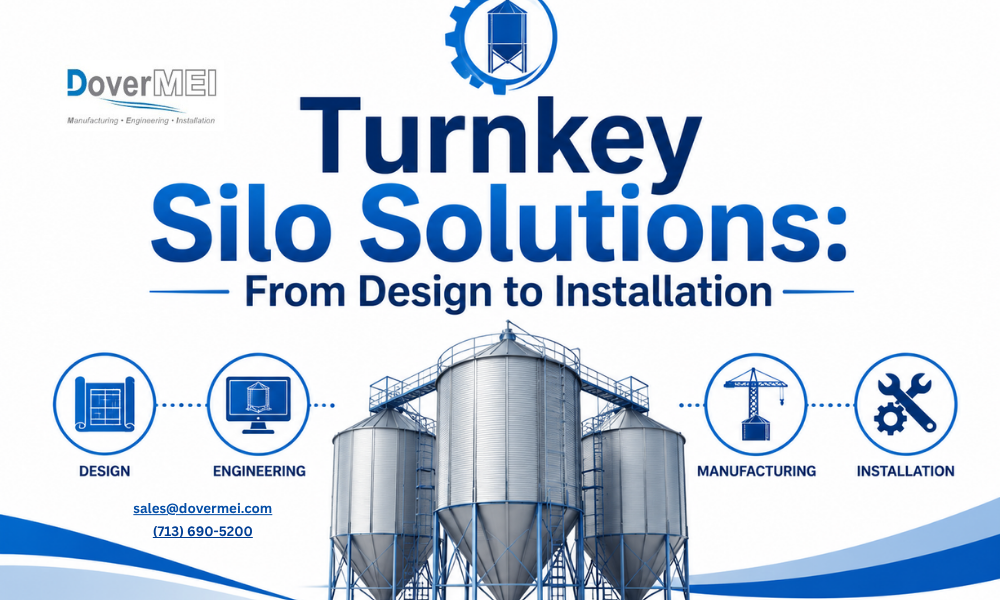
Turnkey silo solutions provide a streamlined approach by bringing design, engineering, equipment selection, fabrication, installation, and related services together under one coordinated process. Instead of managing multiple contractors and attempting to integrate separate components independently, companies can work with an experienced silo provider capable of managing the project from concept through completion.
For operations that depend on reliable bulk storage, this integrated approach can reduce project complexity while creating a storage system designed around actual operational requirements.
What Is a Turnkey Silo Solution?
A turnkey silo solution is a comprehensive bulk storage project delivered through a coordinated design, engineering, manufacturing, and installation process. Rather than treating the silo as an isolated piece of equipment, a turnkey provider considers the complete storage application and the equipment and infrastructure necessary to make the system function effectively.
Depending on the project, a turnkey silo solution may include:
- Silo design and engineering
- Custom silo fabrication
- Bulk material storage equipment
- Structural support systems
- Material loading and discharge systems
- Conveying equipment
- Dust collection and filtration
- Access platforms and ladders
- Safety equipment
- Instrumentation and monitoring systems
- Site preparation coordination
- Silo installation
- Equipment integration
- Inspection and commissioning
- Maintenance and service support
The exact scope depends on the material, application, facility, capacity requirements, and project objectives.
By coordinating these elements through a single experienced provider, businesses can create a more cohesive bulk storage system while reducing the challenges associated with coordinating multiple vendors.
Why Businesses Choose Full-Service Silo Providers
Bulk storage projects can involve numerous technical considerations. A silo must be properly sized, structurally appropriate, compatible with the stored material, and integrated with upstream and downstream processes.
When separate companies are responsible for different parts of the project, communication gaps can create delays or integration problems. A full-service provider can approach the project as a complete system.
One Coordinated Project
A turnkey provider can coordinate the major phases of the project from initial requirements through installation. This creates a centralized point of responsibility and can simplify communication among engineering, fabrication, installation, and operations teams.
Instead of coordinating several independent suppliers, project managers can work with one primary partner responsible for maintaining continuity throughout the process.
Engineering Based on the Application
Not every bulk material behaves the same way. Characteristics such as density, particle size, flowability, moisture content, temperature, abrasiveness, and potential for bridging or compaction can influence silo design.
Custom silo engineering allows the storage system to be developed around the characteristics of the material and the requirements of the facility.
This application-focused approach can help address issues before equipment reaches the job site.
Better Equipment Integration
A silo does not operate independently. It typically connects to conveyors, feeders, pneumatic conveying systems, processing equipment, loading systems, discharge equipment, dust collection systems, and control instrumentation.
A turnkey approach considers these relationships during the design process. This helps ensure that individual components are selected and configured to work together as part of the larger bulk material handling system.
The Turnkey Silo Design and Engineering Process
Effective silo projects begin with understanding the application.
1. Application and Material Assessment
The first stage involves evaluating the material to be stored and understanding how the silo will be used.
Important considerations may include:
- Material density
- Bulk density
- Particle size
- Flow characteristics
- Moisture content
- Temperature
- Abrasiveness
- Corrosiveness
- Required storage capacity
- Fill and discharge rates
- Production requirements
- Environmental conditions
Understanding these factors provides the foundation for developing an appropriate storage solution.
2. Capacity and Configuration Planning
Storage capacity should reflect both current operational requirements and anticipated future needs.
A silo that is too small can create production bottlenecks, while unnecessary capacity can increase capital costs and consume valuable facility space.
During the planning stage, engineers can evaluate silo dimensions, configuration, orientation, placement, and integration with existing processes.
3. Custom Silo Design
Custom silo design is particularly valuable when standard equipment does not adequately address the requirements of a facility.
Custom solutions can account for site restrictions, unusual material characteristics, specialized loading or discharge requirements, structural considerations, and integration with existing equipment.
The goal is to develop a storage system that works within the actual operating environment rather than forcing the facility to adapt to a generic design.
4. Engineering and Technical Development
Engineering considerations can include structural loading, material flow, support structures, access requirements, connection points, equipment integration, and applicable project specifications.
Depending on the application, the design may also incorporate specialized components for monitoring inventory, managing material flow, controlling dust, or improving operator access.
A detailed engineering process helps establish the technical requirements before fabrication and installation begin.
Custom Silo Fabrication for Specialized Applications
Once the design has been established, fabrication transforms the engineered concept into a functional storage vessel.
Custom silo fabrication can be appropriate for facilities with specific capacity, dimensional, material, structural, or integration requirements.
Fabrication considerations may include:
- Silo dimensions and capacity
- Construction materials
- Wall thickness
- Inlet and outlet configurations
- Structural supports
- Access systems
- Flanges and connection points
- Reinforcement requirements
- Surface finishes
- Equipment mounting locations
Proper fabrication is essential because the silo must withstand the mechanical and operational demands of its intended application.
A well-engineered and properly fabricated silo can provide the foundation for dependable long-term bulk storage.
Silo Installation and Project Implementation
Installation is one of the most important stages of a bulk storage project. Even a properly engineered silo can encounter problems if site conditions, equipment interfaces, or installation requirements are not adequately addressed.
A full-service silo provider can coordinate installation requirements with the project design.
Installation may involve:
- Site preparation
- Delivery coordination
- Silo erection
- Structural assembly
- Equipment installation
- Conveying system connections
- Electrical and instrumentation coordination
- Dust collection connections
- Access platform installation
- Piping or process connections
- System inspection
- Testing and commissioning
Coordinating these activities as part of the overall project can help reduce the risk of disconnects between the design and the field installation.
Integrating Silo Systems With Bulk Material Handling Equipment
A silo’s effectiveness depends heavily on how efficiently material enters and leaves the storage system.
Depending on the application, a bulk storage system may require equipment such as:
- Screw conveyors
- Belt conveyors
- Bucket elevators
- Pneumatic conveying systems
- Rotary valves
- Feeders
- Slide gates
- Diverter valves
- Dust collection equipment
- Level indicators
- Load cells
- Control systems
The appropriate combination depends on the material and process.
By considering these systems during the initial design phase, a turnkey provider can help develop a more integrated solution rather than treating each component as a separate project.
Improving Bulk Storage Efficiency
Well-designed bulk storage systems can contribute to more consistent material handling and improved operational efficiency.
An appropriately sized silo can provide a controlled inventory buffer between production stages, helping facilities manage material availability without unnecessarily interrupting production.
Storage systems can also be designed to support efficient loading, controlled discharge, inventory monitoring, and integration with automated material handling processes.
The objective is not simply to store more material. It is to create a storage system that supports the broader production process.
Safety and Accessibility Considerations
Silo design must also account for operator safety and maintenance requirements.
Access platforms, ladders, inspection points, guardrails, and other safety-related features should be considered during engineering rather than added as an afterthought.
Operational considerations may also include:
- Safe inspection access
- Maintenance access
- Emergency considerations
- Dust management
- Level monitoring
- Overfill protection
- Material flow monitoring
- Equipment guarding
The appropriate safety features depend on the application and applicable codes, standards, and facility requirements.
Planning for Long-Term Maintenance
A turnkey project should consider the entire operating life of the storage system, not just installation day.
Accessible components, appropriate equipment selection, replaceable wear components, inspection access, and serviceability can all influence long-term maintenance requirements.
Working with an experienced silo provider can help facility operators consider maintenance during the design stage.
This can be especially important in demanding industrial environments where unexpected equipment downtime can affect production schedules and operating costs.
Advantages of a Single-Source Silo Partner
Choosing one provider for a comprehensive silo project can simplify project management in several ways.
Reduced Vendor Coordination
A single project partner can reduce the number of companies that facility personnel must coordinate.
Consistent Engineering
When design and implementation are managed through the same organization, engineering decisions can carry through to fabrication and installation with greater continuity.
Streamlined Communication
A centralized project contact can make it easier to communicate changes, technical questions, site requirements, and scheduling information.
Improved System Integration
A provider responsible for the complete project can evaluate how storage equipment interacts with the broader material handling system.
Greater Project Accountability
A turnkey approach establishes clearer responsibility for coordinating the various phases of the project.
Choosing the Right Turnkey Silo Provider
Selecting a silo provider should involve more than comparing equipment specifications or initial project pricing.
Businesses should evaluate the provider’s ability to understand the application, develop appropriate engineering solutions, fabricate equipment, coordinate installation, and support the system after completion.
Important considerations include:
- Experience with bulk material storage
- Engineering capabilities
- Custom silo design experience
- Fabrication capabilities
- Installation expertise
- Bulk material handling knowledge
- Equipment integration experience
- Understanding of facility constraints
- Project management capabilities
- Maintenance and service support
The right provider should be capable of addressing the project as an integrated bulk storage system rather than simply supplying a storage vessel.
Turnkey Silo Solutions for Complex Bulk Storage Requirements
Every facility has different production requirements, materials, available space, and operational challenges. For this reason, custom silo solutions can provide advantages over standard equipment when a project requires specialized engineering.
Whether the objective is increasing storage capacity, replacing aging equipment, expanding production, improving material handling, or developing a new facility, a turnkey approach can provide a structured path from initial concept to completed installation.
The most effective projects begin by defining the operational requirements first and then engineering the storage system around those requirements.
Work With DoverMEI for Your Silo Project
When bulk storage is an important part of your operation, the right partner can make the difference between a silo project that simply adds capacity and one that becomes a dependable part of your overall material handling system.
DoverMEI provides custom bulk material handling and silo solutions designed around the specific requirements of industrial applications. From engineering and custom silo design to fabrication, equipment integration, and installation, we can help streamline the process of developing and implementing a complete storage solution.
Whether you are planning a new facility, expanding existing capacity, replacing an outdated silo, or addressing a specialized bulk material storage challenge, DoverMEI can help develop a solution built around your operational requirements.
Ready to discuss your project? Contact DoverMEI to explore your silo design, bulk storage, and material handling requirements with an experienced team.
Conclusion
A successful bulk storage project requires more than a properly sized storage vessel. Turnkey silo solutions bring design, engineering, fabrication, equipment integration, and installation together into one coordinated process.
By partnering with a capable full-service provider, industrial facilities can develop storage systems that are aligned with their materials, production requirements, facility constraints, and long-term operational objectives.
For organizations planning a new silo, expanding bulk storage capacity, replacing existing equipment, or addressing a complex material handling challenge, DoverMEI provides the expertise needed to move from silo concept and engineering to fabrication and installation with a coordinated approach.
Contact DoverMEI today to discuss your custom silo, bulk storage, and material handling requirements.
Frequently Asked Questions About Turnkey Silo Solutions
What is a turnkey silo solution?
A turnkey silo solution is a comprehensive approach in which a provider manages multiple stages of a silo project, potentially including design, engineering, fabrication, equipment integration, installation, testing, and commissioning. The goal is to provide a coordinated storage system rather than a standalone silo.
What are the benefits of working with a full-service silo provider?
A full-service silo provider can simplify project management by coordinating engineering, fabrication, equipment integration, and installation. This can reduce communication challenges between multiple vendors and help maintain consistency throughout the project.
Can silos be custom designed for specific materials?
Yes. Custom silo design can account for the characteristics of the stored material, including bulk density, flowability, particle size, moisture, temperature, abrasiveness, and other application-specific requirements.
What materials can be stored in industrial silos?
Industrial silos can be designed for many types of dry bulk materials. The appropriate silo configuration depends on the physical and handling characteristics of the material as well as the facility’s storage and processing requirements.
How is silo capacity determined?
Silo capacity is determined based on factors such as required inventory, material bulk density, production rates, loading and unloading requirements, available space, and future operational needs.
Does silo design include material discharge equipment?
It can. Depending on the project, silo systems may incorporate feeders, conveyors, rotary valves, slide gates, pneumatic conveying equipment, or other discharge technologies. The appropriate system depends on the material and process.
Can a new silo be integrated with existing equipment?
Yes. A custom silo project can be engineered around existing conveyors, processing equipment, loading systems, discharge equipment, dust collection systems, and controls. Integration requirements should be evaluated during the design phase.
How long does a silo installation take?
Project schedules vary depending on silo size, design complexity, fabrication requirements, site conditions, equipment integration, permitting, and installation scope. A detailed project schedule can be developed after the technical requirements are established.
Why choose custom silo fabrication instead of a standard silo?
Custom fabrication can be beneficial when standard equipment does not fit the facility’s dimensions, material characteristics, capacity requirements, structural requirements, or process configuration. Customization allows the storage system to be developed around the actual application.
What should be considered when replacing an existing silo?
A silo replacement project should consider current storage capacity, material characteristics, structural requirements, existing equipment connections, site access, discharge requirements, loading systems, safety considerations, and opportunities to improve the existing material handling process.
Can DoverMEI help with a complete silo project?
DoverMEI can help address the engineering, design, fabrication, and implementation requirements associated with custom silo and bulk material handling projects. Contact DoverMEI to discuss your application and determine the appropriate approach for your bulk storage requirements.