

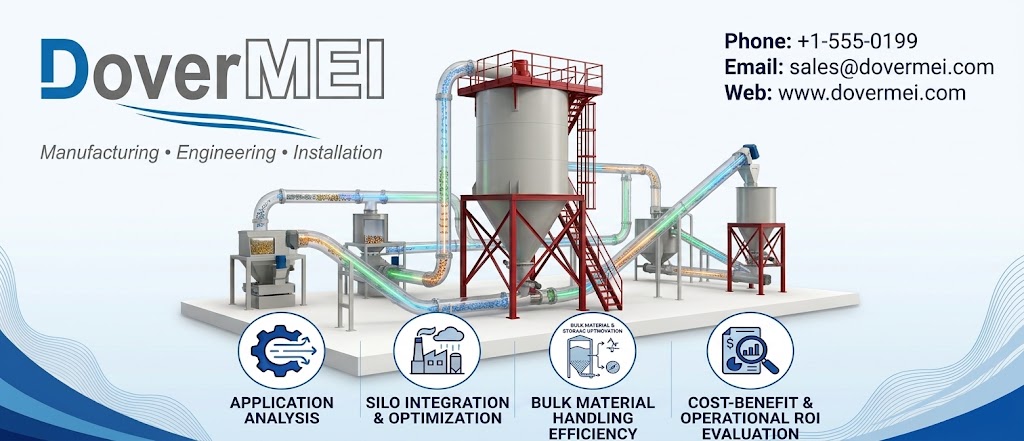
Manufacturing operations depend on the smooth movement of materials, information, equipment, and finished products. When these elements are poorly coordinated, manufacturers can experience production delays, excess inventory, material waste, equipment downtime, and higher operating costs. Silo solutions provide a structured way to store, manage, and control bulk materials while supporting more consistent and efficient production processes.
By integrating properly designed silos with material handling, conveying, automation, and inventory management systems, we can create a more streamlined manufacturing environment. The result is better material availability, improved process control, reduced manual intervention, and greater operational efficiency.
What Are Silo Solutions in Manufacturing?
Silo solutions are engineered storage and material-handling systems designed to store and manage bulk materials used in manufacturing safely. Depending on the application, silos can hold materials such as powders, pellets, granules, aggregates, chemicals, food ingredients, plastics, cement, minerals, and other dry bulk products.
A complete silo solution can include more than the storage vessel itself. We may incorporate:
- Bulk storage silos
- Material conveying systems
- Pneumatic conveying equipment
- Mechanical conveyors
- Feeders and discharge systems
- Level monitoring equipment
- Weighing and batching systems
- Dust collection systems
- Valves and flow-control equipment
- Automated controls
- Loading and unloading systems
- Safety equipment
- Inventory monitoring technology
The objective is to create a coordinated system that moves materials efficiently from receiving and storage through production and, ultimately, to the next stage of the manufacturing process.
How Silo Solutions Improve Manufacturing Efficiency
1. Better Bulk Material Storage
One of the most direct benefits of silo systems is improved bulk material storage. Traditional storage methods may require multiple containers, bags, pallets, or floor storage areas. These approaches can consume valuable facility space and require additional labor for handling.
With properly designed silos, we can consolidate bulk materials into dedicated storage systems. This can improve space utilization while creating a more organized manufacturing environment.
Vertical silo designs can also make better use of available floor space by taking advantage of overhead capacity. For facilities where floor space is limited or expensive, efficient vertical storage can provide a significant operational advantage.
2. Reduced Material Handling Labor
Manual material handling can be time-consuming and physically demanding. Workers may need to unload bags, transfer materials between containers, measure ingredients, and move materials into production areas.
Silo solutions can automate many of these activities.
By connecting silos to conveyors, feeders, and automated dispensing systems, we can reduce unnecessary manual material movement. Materials can travel directly from storage to processing equipment according to defined production requirements.
This allows employees to focus more on production, quality control, equipment monitoring, and other higher-value responsibilities.
3. More Consistent Material Flow
Manufacturing processes often depend on maintaining a reliable supply of raw materials. Interruptions in material flow can slow production or cause equipment to sit idle.
A properly engineered silo system provides controlled material discharge and consistent feeding. Flow-control equipment can regulate how much material enters the next stage of the process.
This is especially valuable when manufacturing operations require precise quantities or continuous material flow.
Consistent material delivery helps manufacturers maintain predictable production cycles and reduce avoidable interruptions.
4. Improved Inventory Management
Knowing how much material is available is essential for efficient manufacturing. Overstocking ties up capital and requires additional storage capacity, while insufficient inventory can result in production delays.
Modern silo solutions can incorporate level sensors, inventory monitoring, weighing systems, and automated controls to provide more accurate visibility into material levels.
Manufacturers can use this information to improve purchasing decisions and production planning.
Instead of relying solely on manual inspections or estimates, operators can monitor inventory levels and identify when materials need to be replenished.
5. Reduced Material Waste
Material waste can have a direct effect on manufacturing costs. Losses may occur through spills, inaccurate measurements, contamination, inefficient transfer processes, or poor storage practices.
Silo systems can help minimize these losses by creating controlled storage and transfer environments.
Automated feeding and weighing systems can also improve material accuracy. When the correct quantity of material is consistently delivered to production, manufacturers can reduce overfeeding, underfeeding, and unnecessary material consumption.
Silo Automation and Process Control
Automation is an increasingly important component of efficient manufacturing operations. A silo does not have to operate as an isolated storage container. It can become part of an integrated material management system.
We can connect silo equipment with automated controls that monitor and manage:
- Material levels
- Material flow
- Feeding rates
- Weights
- Pressure
- Temperature
- Equipment status
- Conveying operations
- Replenishment requirements
Integration with a plant’s broader control system can provide operators with better visibility into the production process.
Automation also reduces dependence on manual intervention. When properly configured, the system can automatically deliver materials according to predetermined production requirements.
Improving Production Scheduling
Production schedules depend on having the right materials available at the right time. A shortage of one essential ingredient or raw material can affect an entire production run.
Silo solutions support production scheduling by providing dedicated storage capacity and better visibility into material availability.
When inventory data is connected to production planning, manufacturers can make better-informed decisions regarding purchasing, replenishment, and production sequencing.
This can help reduce situations where production schedules must be changed because materials are unavailable.
Reducing Manufacturing Downtime
Unexpected downtime is one of the most costly problems in manufacturing. While silo systems cannot eliminate every source of downtime, well-designed material storage and handling systems can reduce downtime caused by material shortages, transfer problems, and manual handling delays.
Reliable conveying equipment, appropriate discharge systems, monitoring technology, and preventative maintenance can work together to keep materials moving.
We can also design systems with accessibility and maintenance requirements in mind, making it easier for operators and maintenance teams to identify and address potential problems.
Better Workplace Safety
Manual bulk material handling can introduce several workplace hazards, including lifting injuries, spills, dust exposure, and unnecessary movement of heavy materials.
Silo solutions can reduce the amount of manual handling required within a manufacturing facility.
Enclosed conveying systems and appropriate dust-control equipment can also help contain airborne materials where dust generation is a concern.
Safety should be incorporated into the engineering and operation of the entire material-handling system, including access points, valves, ladders, platforms, pressure management, and maintenance procedures.
Improved Product Quality and Material Consistency
Manufacturing efficiency is not only about producing more products. We also need to maintain consistent product quality.
Variations in raw material quantities or inconsistent feeding rates can affect the final product. Automated storage, weighing, and feeding systems can help manufacturers maintain greater control over material inputs.
For processes involving multiple ingredients or raw materials, automated batching can provide more repeatable material ratios.
This supports process consistency, quality control, and production repeatability.
Silo Solutions for Different Manufacturing Applications
Silo requirements vary significantly depending on the material, production process, facility layout, and desired capacity.
For example, a system designed for plastic pellets may have very different requirements from one designed for cement, powdered chemicals, food ingredients, or mineral products.
We consider factors such as:
- Material characteristics
- Bulk density
- Flowability
- Moisture sensitivity
- Storage capacity
- Required throughput
- Loading and unloading requirements
- Facility layout
- Environmental conditions
- Automation requirements
- Cleaning and maintenance requirements
Selecting the appropriate equipment and configuration ensures that the silo system supports the actual manufacturing process rather than becoming an isolated storage solution.
Integrating Silos With Material Handling Systems
The greatest operational benefits often come when silos are integrated with the rest of the material-handling infrastructure.
A typical integrated system may include:
Receiving → Silo Storage → Conveying → Feeding → Batching → Processing → Finished Product Handling
Each stage needs to work together.
If silo storage is efficient but the conveying system cannot provide the required throughput, the overall process may still experience bottlenecks. Similarly, highly automated conveying equipment will not provide its full value if material storage and discharge systems are poorly configured.
We therefore approach silo systems as part of the broader manufacturing workflow.
How Silo Solutions Support Scalability
Manufacturers often need to increase production capacity without completely rebuilding their facilities. Properly planned silo systems can provide opportunities for future expansion.
A scalable solution may allow manufacturers to add:
- Additional storage capacity
- Additional silos
- New conveying lines
- Automated feeders
- Monitoring equipment
- Additional production connections
- Expanded control capabilities
Planning for future requirements during the initial design phase can make later expansion more manageable and cost-effective.
Choosing the Right Silo Solution
The right silo solution depends on much more than storage capacity. We evaluate the complete operational requirement before selecting equipment and system configurations.
Important considerations include:
Material Characteristics
We need to understand how the material behaves during storage and discharge. Powders, pellets, granules, and other bulk materials can have very different flow characteristics.
Capacity Requirements
Storage capacity should support production requirements while avoiding unnecessary overinvestment in unused capacity.
Throughput
The system must be capable of moving material at the rate required by the manufacturing process.
Automation
Manufacturers should determine how much of the storage, monitoring, weighing, and material-handling process should be automated.
Facility Layout
Silo placement must account for available space, vehicle access, conveying distances, maintenance access, and connections to production equipment.
Maintenance
Equipment should be accessible for inspection, cleaning, servicing, and repairs.
The Long-Term Value of Efficient Silo Systems
A silo solution is an investment in the infrastructure supporting a manufacturing operation. Its value should therefore be measured beyond the initial installation cost.
An efficient system can contribute to:
- Lower material handling costs
- Improved labor utilization
- Reduced material waste
- Better inventory visibility
- More consistent material flow
- Reduced production interruptions
- Improved workplace organization
- Greater process control
- Better scalability
- More predictable manufacturing operations
When storage, handling, automation, and production processes are designed to work together, manufacturers can create a more reliable and efficient operation.
Why Professional Silo Engineering Matters
Silo systems must be designed around the specific materials and processes they will support. A poorly matched storage or discharge system can create flow problems, maintenance challenges, material loss, and production bottlenecks.
Professional engineering and system integration help ensure that the silo, material-handling equipment, controls, and supporting infrastructure operate as a coordinated system.
For manufacturers evaluating a new silo installation or upgrading an existing material-handling operation, a detailed assessment of current processes can identify opportunities to improve efficiency while supporting long-term production goals.
Improve Manufacturing Efficiency With DoverMEI
When bulk material storage becomes a bottleneck, the right silo and material-handling solution can help improve production flow, inventory control, safety, and operational efficiency.
DoverMEI can help manufacturers evaluate their material-handling requirements and identify solutions designed around their operational goals. From bulk storage and material movement to system integration and automation, the right approach can create a more efficient and reliable manufacturing process.
Contact DoverMEI today to discuss your silo and bulk material-handling requirements and explore a solution designed for your manufacturing operation
FAQs About Silo Solutions in Manufacturing
What are silo solutions used for in manufacturing?
Silo solutions are primarily used for the storage, handling, monitoring, and controlled discharge of bulk materials. They can be integrated with conveyors, feeders, weighing systems, and automation to move raw materials efficiently into manufacturing processes.
How do silos improve manufacturing efficiency?
Silos can improve efficiency by reducing manual material handling, maximizing storage space, improving material availability, supporting automated feeding, reducing waste, and creating more consistent material flow.
Can silo systems be automated?
Yes. Silo systems can incorporate sensors, level monitoring, weighing equipment, automated valves, feeders, conveyors, and control systems. Automation can reduce manual intervention and provide operators with better visibility into material inventory and movement.
Do silo solutions reduce material waste?
They can. Controlled storage, discharge, weighing, and conveying can help reduce spills, inaccurate measurements, contamination, and other sources of material loss.
What materials can be stored in silos?
Depending on the system design, silos can accommodate many types of bulk materials, including powders, pellets, granules, aggregates, chemicals, minerals, food ingredients, plastics, and other dry materials.
How do we determine the right silo capacity?
Silo capacity should be based on factors such as material consumption, production volume, delivery schedules, required inventory levels, available facility space, and future expansion plans.
Can existing manufacturing facilities be upgraded with silo solutions?
In many cases, yes. Existing facilities can potentially be upgraded with new silos, conveyors, feeders, controls, and monitoring equipment. The facility layout and existing infrastructure should be evaluated before selecting a solution.
Why is silo system integration important?
Integration ensures that storage, conveying, feeding, weighing, automation, and production equipment work together. A silo that is not properly integrated into the manufacturing workflow may create bottlenecks rather than improve efficiency.